











การเสิร์ฟสาเกญี่ปุ่นมีชื่อเรียกตามช่วงอุณหภูมิที่ละเอียดมาก ในขณะที่เครื่องดื่มทั่วไปอาจแบ่งแค่อุณหภูมิห้องหรือแช่เย็น แต่สำหรับสาเก ทุกๆ 5°C ที่เปลี่ยนไป คือภาษากวีที่ผูกโยงไว้กับธรรมชาติและฤดูกาล
❄️ Yuki-hie (雪冷え) ราว 5°C แปลว่า “เย็นดั่งหิมะ” เหมาะกับสาเกที่มีกลิ่นหอมชัดเจน
🌸 Hana-hie (花冷え) ราว 10°C แปลว่า “เย็นดั่งดอกไม้” เย็นสดชื่นเปรียบดั่งดอกไม้บานในฤดูใบไม้ผลิ
🍃 Suzu-hie (涼冷え) ราว 15°C แปลว่า “เย็นสบาย”
💧 Hiya (冷や) ราว 20°C แปลว่า “เย็น” (อุณหภูมิห้อง) เป็นอุณหภูมิดั้งเดิมที่สัมผัสรสชาติแท้จริงได้ดี
🌤️ Hinata-kan (日向燗) ราว 30°C แปลว่า “อุ่นดั่งแสงแดด” อุ่นน้อยๆ เหมือนโดนแดดอ่อนๆ
☀️ Hitohada-kan (人肌燗) ราว 35°C แปลว่า “อุ่นเท่าผิวกาย” หรืออุ่นเท่าอุณหภูมิผิวหนังมนุษย์ กลิ่นข้าวเริ่มเด่นชัด
🌡️ Nuru-kan (ぬる燗) ราว 40°C แปลว่า “อุ่นละมุน” เป็นระดับอุ่นกำลังดีและเป็นที่นิยม
🔶 Jō-kan (上燗) ราว 45°C แปลว่า “อุ่นชั้นดี” เริ่มมีไอน้ำกรุ่นและกลิ่นหอมฟุ้งกระจาย
🔥 Atsu-kan (熱燗) ราว 50°C แปลว่า “ร้อน” ร้อนจัด มีไอน้ำพวยพุ่ง รสชาติจัดจ้านขึ้น
🌋 Tobikiri-kan (飛び切り燗) ราว 55°C ขึ้นไป แปลว่า “ร้อนจัดสุดขั้ว” ให้รสชาติที่เข้มข้นและเผ็ดร้อนที่สุด
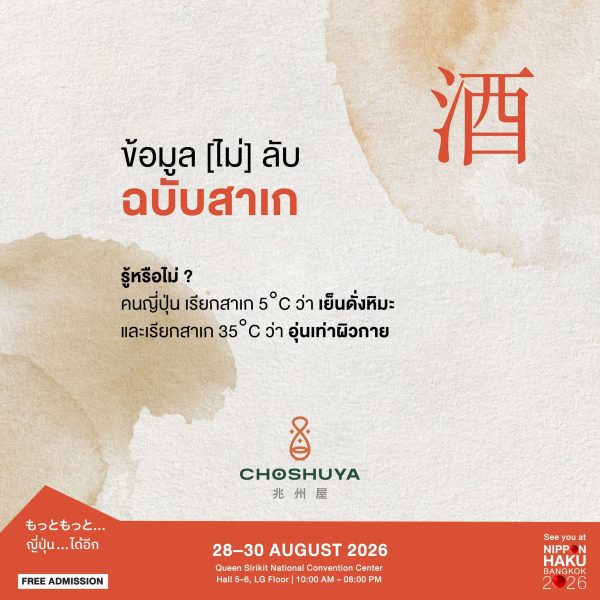
การตั้งชื่อแบบนี้สะท้อนให้เห็นว่า คนญี่ปุ่นมองสาเกไม่ใช่แค่เครื่องดื่ม แต่เป็นสิ่งที่เปลี่ยนบุคลิกไปตามอุณหภูมิ เหมือนมีสาเกหลายเวอร์ชันซ่อนอยู่ในขวดเดียว
อยากรู้ว่าสาเกแต่ละประเภทเหมาะกับอุณหภูมิไหนบ้าง แวะพูดคุยกับทีมงาน CHOSHUYA ได้ที่บูธได้เลย!
*จำหน่ายเฉพาะผู้มีอายุ 20 ปีบริบูรณ์ขึ้นไป
One of the clearest expressions of the refined culture of Japanese sake is the poetic way its serving temperatures are named.
Japanese sake has remarkably detailed names for different temperature ranges. While many beverages are simply served chilled or at room temperature, sake gives meaning to every 5°C—connecting temperature with nature and the seasons.
❄️ Yuki-hie (雪冷え) ~5°C — “snow-cold,” ideal for sake with pronounced aromas
🌸 Hana-hie (花冷え) ~10°C — “flower-cold,” refreshing like spring flowers in bloom
🍃 Suzu-hie (涼冷え) ~15°C — “cool and refreshing”
💧 Hiya (冷や) ~20°C — “cool,” traditionally referring to room temperature
🌤️ Hinata-kan (日向燗) ~30°C — “warmed by sunlight,” gently warm like soft sunshine
☀️ Hitohada-kan (人肌燗) ~35°C — “body-temperature warm,” bringing out the aroma of rice
🌡️ Nuru-kan (ぬる燗) ~40°C — “gently warm,” a popular serving temperature
🔶 Jō-kan (上燗) ~45°C — “well-warmed,” with rising steam and more pronounced aromas
🔥 Atsu-kan (熱燗) ~50°C — “hot sake,” with a stronger, more intense character
🌋 Tobikiri-kan (飛び切り燗) 55°C+ — “extremely hot,” offering the most intense and warming profile
This poetic naming reflects how Japanese culture sees sake as more than just a drink. Its character can change with temperature—as if one bottle holds many different versions of itself.
Curious which temperature suits different types of sake? Come chat with the CHOSHUYA team at their booth!
*Available for purchase to customers aged 20 and above only.
📌 ลงทะเบียนล่วงหน้า แล้วมาค้นพบ “ญี่ปุ่นในแบบของคุณ” ไปด้วยกัน
Pre-register now and discover your own Japan with us.
事前登録をして、あなただけの「日本」を見つけに来ませんか。
🔗 https://cutt.ly/qt5fARDp
🔴 NIPPON HAKU BANGKOK 2026 (นิปปอนฮาคุ 2026)
📅 28–30 August 2026
🕙 10:00 AM – 8:00 PM
📍 Queen Sirikit National Convention Center, LG Floor, Hall 5–6
✨ Free Admission✨